Weekly Insights. December 13, 2025
Best hospitality industry articles focused on 💵revenue, 📊markets, and 🎯strategy (Dec 7 - Dec 13, 2025)

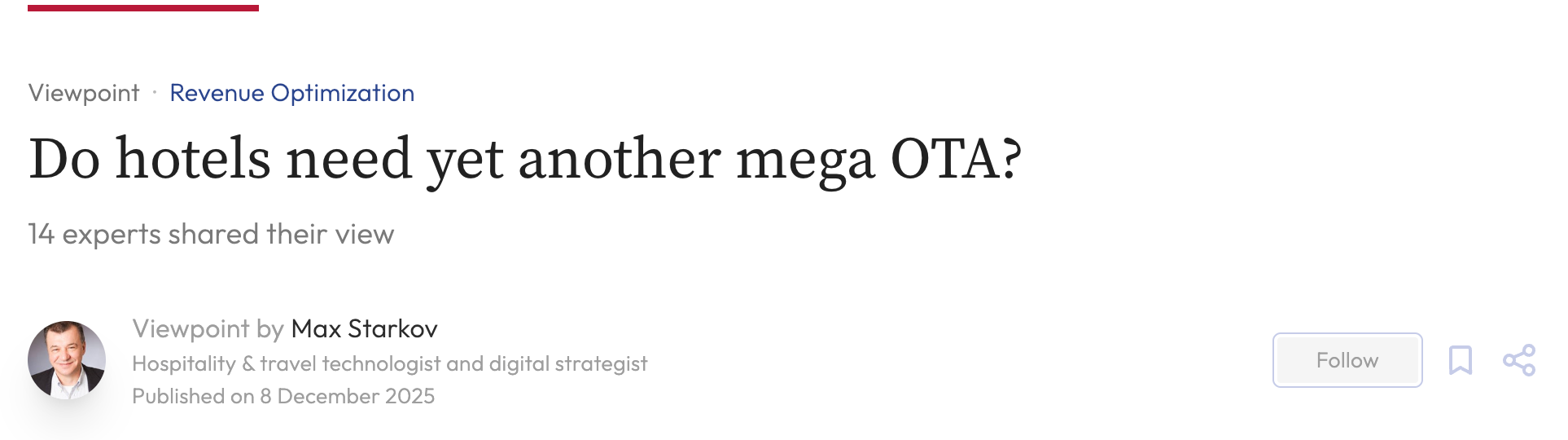
Do hotels need yet another mega OTA?
Recently, Brian Chesky, the CEO of Airbnb, declared that "hotels as the future of Airbnb." The company is including more hotels on its platform, especially independent and boutique properties in urban locations and destinations with limited home-sharing supply. This latest move aims to fill gaps in availability, attract more travelers.
This is part of Airbnb's "beyond the core" strategy to become an "everything app" for travel. In other words: Airbnb is becoming another OTA. Why?
Recently, Airbnb started charging its short-term rental (STR) hosts 15.5% commission and dropped its guest-facing service fee, mimicking Booking.com. The volume of short-term rental roomnights generated by Booking is already exceeding 85% of Airbnb's volume of roomnights.
Airbnb feels threatened for its core STR business and the above are defensive moves by the company.
The question is: do hoteliers need yet another mega OTA?
AI will not save hospitality. It will finish what the OTAs started
The article argues that AI will not bring back true hospitality but will push the industry further toward efficient, impersonal transactions started by OTAs. Owners focused on ROI, thin staffing, and “personalization” that is really data targeting all point the sector to a smart but soulless experience unless leaders choose to restore human service. The warning is to use technology for basics while protecting genuine hospitality as the differentiator.
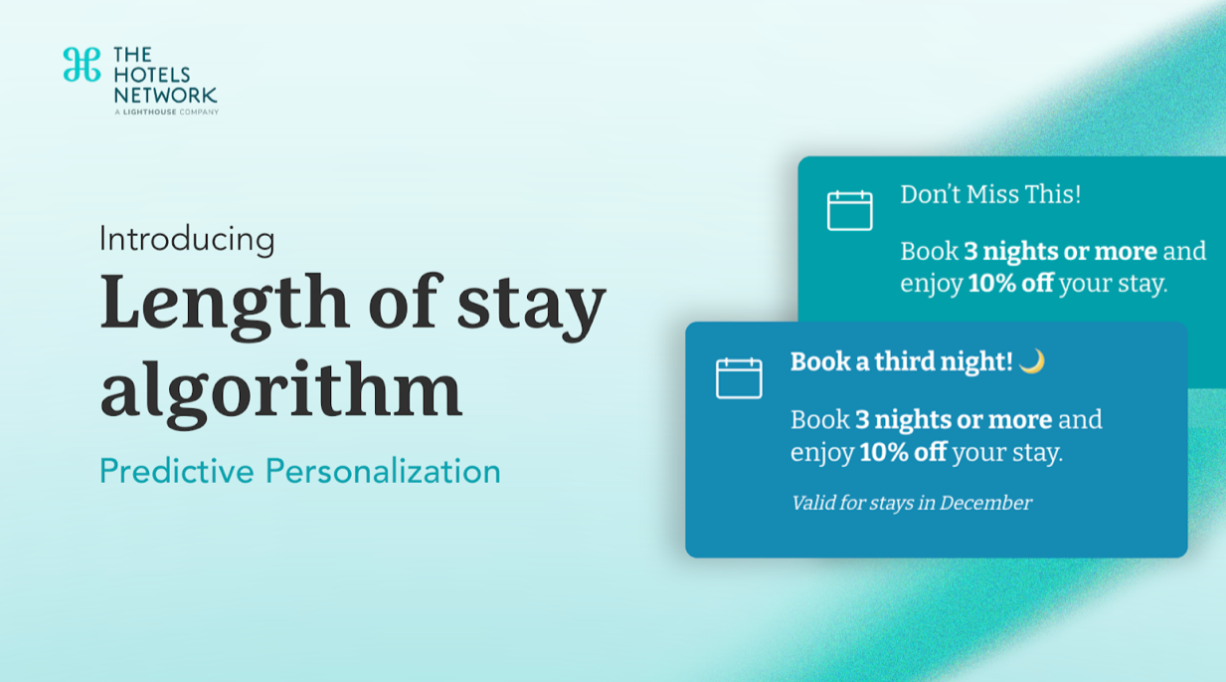
The secret to longer guest stays? Predictive personalization powered by AI
The article explains how AI powered predictive personalization can nudge guests to stay longer by showing the right messages and offers at the right moment. It uses intent signals and behavior to tailor on site banners, pop ups, and booking engine prompts that suggest extra nights, late checkout, or value bundles. With real time testing and clear measurement, hotels can lift conversion, length of stay, and total revenue while keeping the experience relevant and helpful.
The 11 travel and hospitality trends that will shape 2026
The article says 2026 will bring tougher competition as cautious, AI armed travelers seek value, new destinations, and alternative travel windows amid economic and geopolitical volatility. It highlights rising traveler taxes, shifting seasonality in Europe, currency driven demand changes, a slowdown in short term rental supply due to regulation, and a growing preference for high quality stays. AI use in planning and on hotel teams is set to surge, while bookings spread across OTAs, social platforms, and agents, making channel choice and direct readiness critical. The advice is to build connected tech and a single source of truth, use forward looking demand data, personalize with deep segmentation and attribute based selling, and prepare content and rates so AI can find and book the hotel directly.

How ChatGPT plans to book hotels (and why your property might be invisible)
The article explains that ChatGPT and similar AI assistants are starting to plan and book hotels inside the conversation, which means properties without live rates, availability, and clean content risk becoming invisible. To show up and win direct bookings, hotels need structured data, complete listings and reviews, accurate pricing feeds through metasearch and APIs, and a clear path to purchase. It also urges strong data hygiene, privacy controls, and simple measurement so AI driven traffic turns into revenue.
A plan is not a strategy in luxury hotel asset management
The article argues that in luxury hotel asset management a plan is not the same as a strategy. A plan lists actions and timelines, while strategy defines where the asset will win, how it will compete, and how capital and resources will be allocated to raise long term value. It stresses aligning owner goals with brand and operator, focusing on market positioning and guest mix, setting profit and cash flow targets, and using data and scenario planning to adjust quickly. The message is to lead with strategy first, then build plans that serve it.

The trends reshaping how we eat and drink in 2026
The article outlines 2026 food and drink trends in the United States, highlighting the return of lively bar seating, a boom in better for you and no alcohol beverages, tighter curated menus with prix fixe options, rising Korean Vietnamese and Filipino influences, matcha moving into cocktails and savory dishes, dramatic retro desserts, omakase style experiences beyond sushi, gentler spice profiles, snackable small plates with a focus on crunch, limited time specials, and garden grown herbal cocktails, all pointing to dining that is intentional, playful, and event like.

Follow on LinkedIn