
Weekly Insights. September 12, 2026

One Internet. Two distribution ecosystems
The article argues that hotel distribution is splitting into two ecosystems: the traditional web, where travelers search, compare, and book themselves, and an emerging AI agent ecosystem, where assistants increasingly discover hotels, answer questions, compare options, and eventually complete transactions. It explains how this changes search, SEO, attribution, and booking, then outlines four things hotels will need to compete in the AI world: verified identity, trusted authority, structured operational knowledge, and executable capabilities such as checking rates, modifying reservations, and processing payments, with the main message that hotels will need technology partners capable of supporting both ecosystems.

Hotel subscriptions: Exploring membership models
EHL examines access-based, credit-based and unlimited-stay hotel subscriptions and how their economics differ from traditional loyalty programs. Subscriptions can create predictable recurring revenue and help monetize unused inventory, but examples from Inspirato, Accor, Zoku and citizenM illustrate the revenue-management problem: member usage during high-demand periods can displace substantially more profitable business. The article provides a useful framework for deciding when recurring revenue actually improves profitability rather than simply creating committed demand.

Your hotel has more data than ever. So why are managers still chasing answers?
Rather than arguing that hotels need more data, the article focuses on the management effort required to connect existing forecasts, schedules, workload and actual labor performance. Its Forecast → Plan → Schedule → Work → Actuals framework provides a practical way to diagnose where a labor variance actually began, instead of treating the final variance as the problem. It also makes the useful point that identical occupancy levels can create very different operating workloads depending on departures, stayovers, groups and arrival patterns.

10 proven ways to increase direct bookings in 2026
The article is a practical checklist for growing hotel direct bookings in 2026, covering rate parity, Google Free Booking Links, booking engine conversion, direct booking perks, closed user group rates, SEO, metasearch, email marketing, AI and SMS tools, and channel mix tracking, while also explaining the profit logic behind shifting business away from OTAs and emphasizing that direct booking growth works best as an ongoing commercial discipline rather than a one time campaign.

10 tried and true hotel Revenue Management strategies
The article is a broad guide to ten hotel revenue management strategies, covering dynamic pricing with live market data, ancillary revenue, flexible group and event business, forecasting and benchmarking, direct booking incentives, segmentation, distribution, online visibility, KPI tracking, and AI powered revenue tools, with the overall focus on how hotels can connect pricing, demand, channels, guest behavior, and technology into a more flexible commercial strategy.

Spend, Savings and Control: Where AI Is Really Landing for Hotel Owners
World Panel experts discuss where AI is producing measurable benefits today across operations, distribution and ownership decision-making. The discussion is notably pragmatic: participants see near-term value in consolidating information, identifying risks, testing capital decisions and reducing administrative work, while questioning whether brand-level efficiency gains are actually reaching owners.
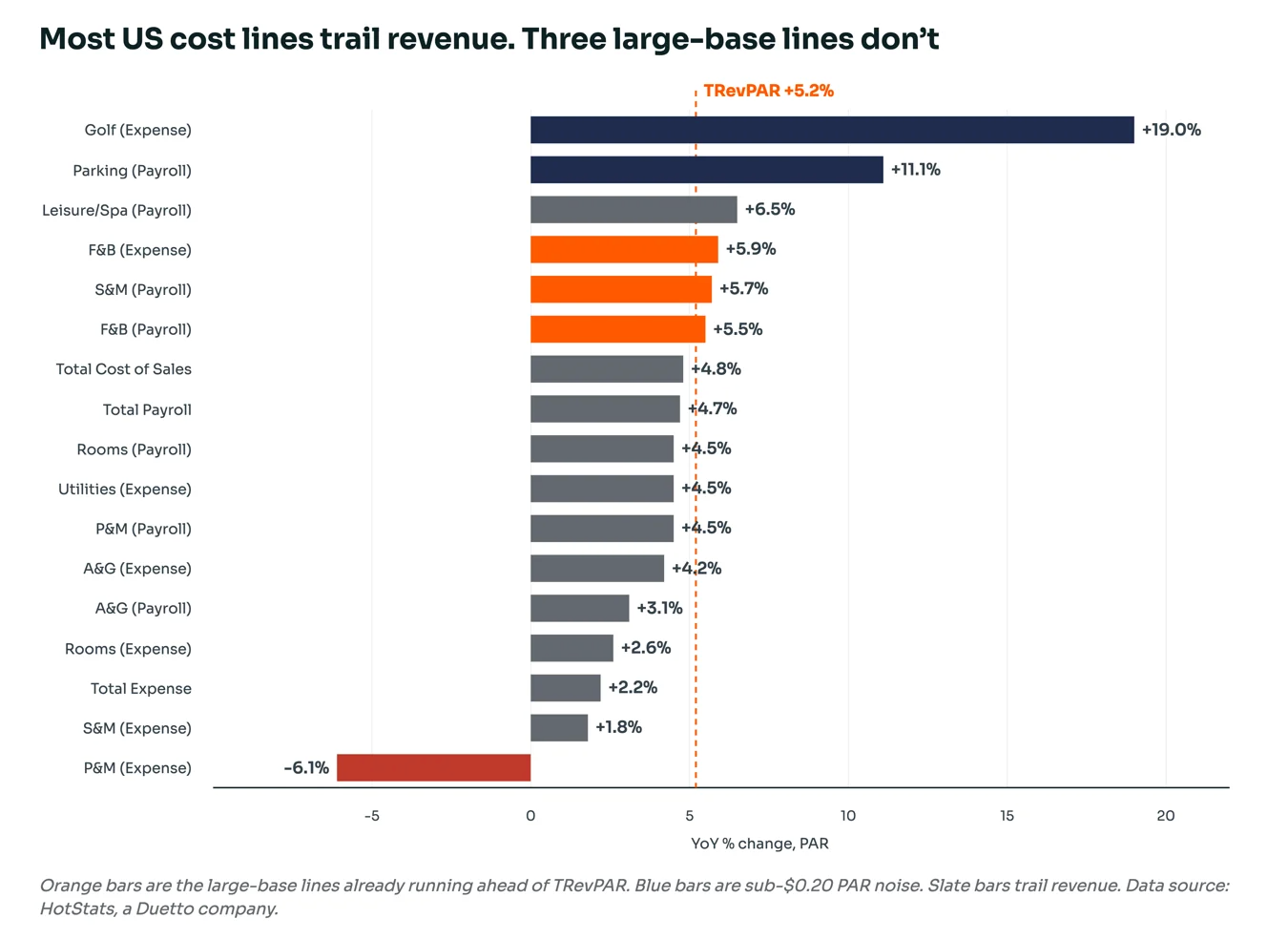
Where cost pressure is actually building across the Americas
HotStats finds that aggregate U.S. profitability remains healthy. GOPPAR was up 7.8% year to date through July, but the headline masks important cost pressures. F&B expenses and payroll are growing faster than revenue, luxury hotels carry particularly heavy payroll exposure, and markets such as Mexico and South America tell very different stories from the U.S. average. The practical message for 2027 budgeting is to model costs by property, market and department rather than applying portfolio-wide assumptions, while removing the World Cup lift from the forward baseline.
Follow on LinkedIn
Merch for RevPAR gurus.