

Weekly Insights. July 25, 2026
Best hospitality industry articles focused on 💵revenue, 📊markets, and 🎯strategy (Jul 19 - Jul 25, 2026)

World Cup Recap: What hoteliers can learn from the 2026 tournament
Article analyzes pricing across all 104 World Cup match nights and finds that average rates fell 44% from their peak 155 days before arrival to match night. The pattern suggests many hotels opened too aggressively, raised rates without supporting pickup, and then discounted late to compensate for missing base occupancy. The article offers broader lessons for major events: account for the traveler’s total trip cost, alternative accommodation supply, shoulder-night demand, and actual booking behavior rather than assuming compression will materialize.

What asset managers do that AI can't
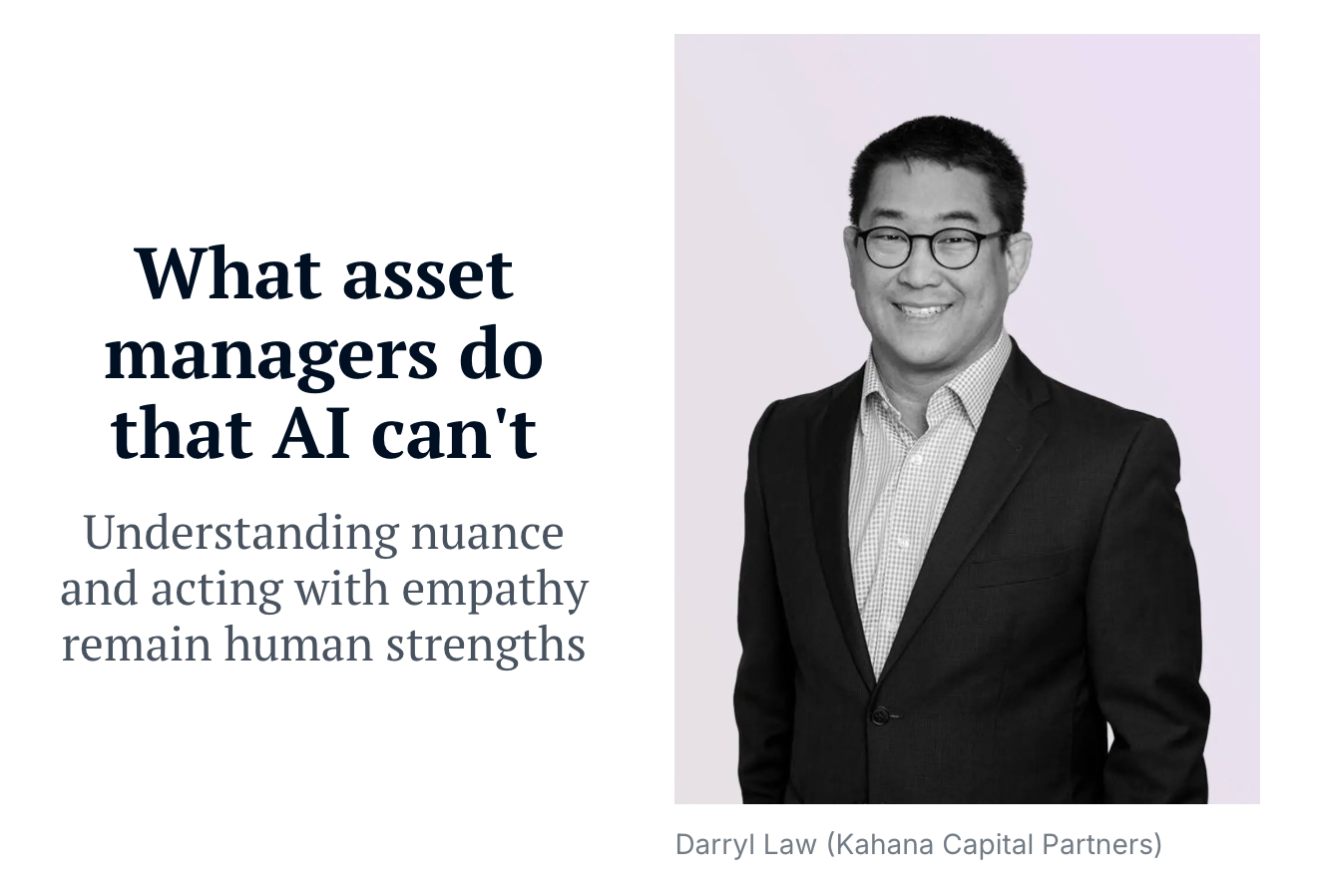
The article separates the analytical tasks AI can improve (such as scenario modeling, capital-expenditure benchmarking and forecast-variance detection) from the human work required to turn analysis into results. When performance misses underwriting, an asset manager still has to reconcile competing explanations, build trust among ownership, operators and brands, and create accountability for the recovery plan. It presents AI as a tool for better-informed asset management rather than a substitute for judgment, stakeholder alignment and execution.
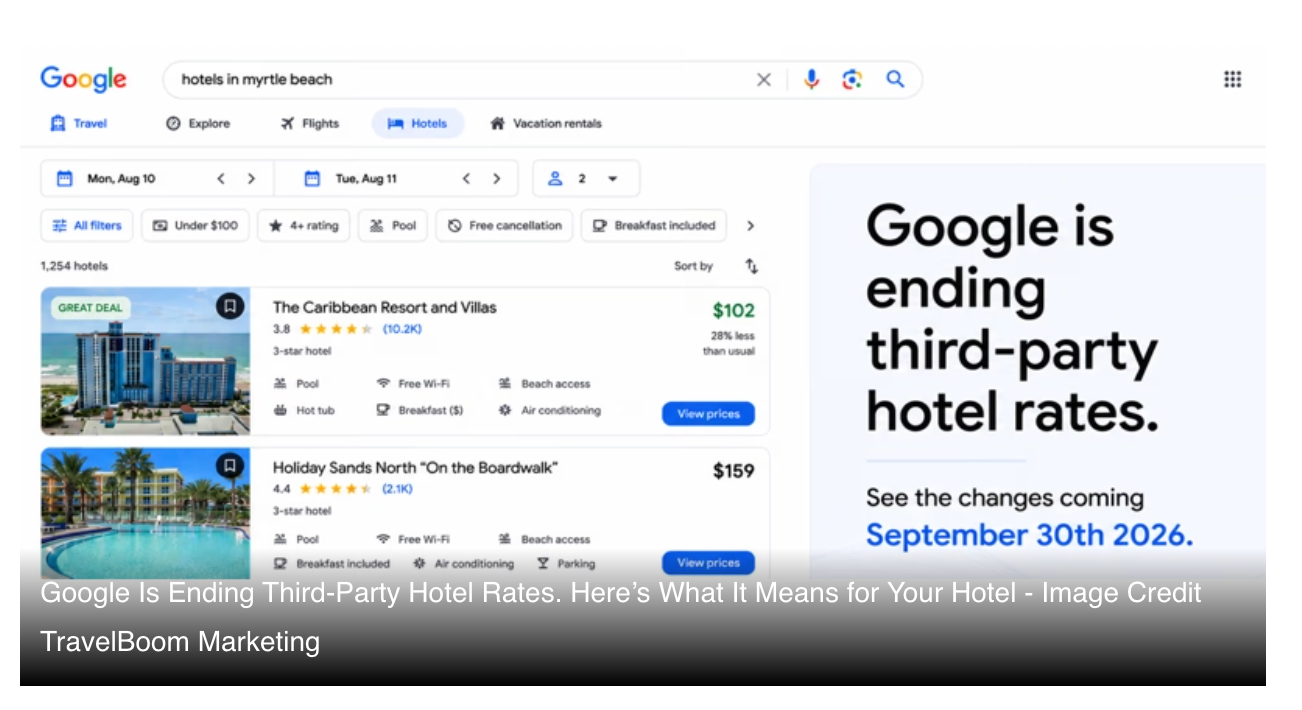
Google is ending third-party hotel rates. Here’s what it means for your hotel
Google will discontinue Google-sourced third-party hotel rates after September 30, 2026. Hotels currently relying on that connection will need a direct price feed through Hotel Center or an integration partner and must recreate affected campaigns; otherwise, their ads will stop appearing in hotel-specific inventory such as the Booking Module and Travel Promotion Ads. The article translates a technical platform change into a practical distribution checklist involving connectivity, price accuracy, campaign rebuilding, tracking and implementation lead time.
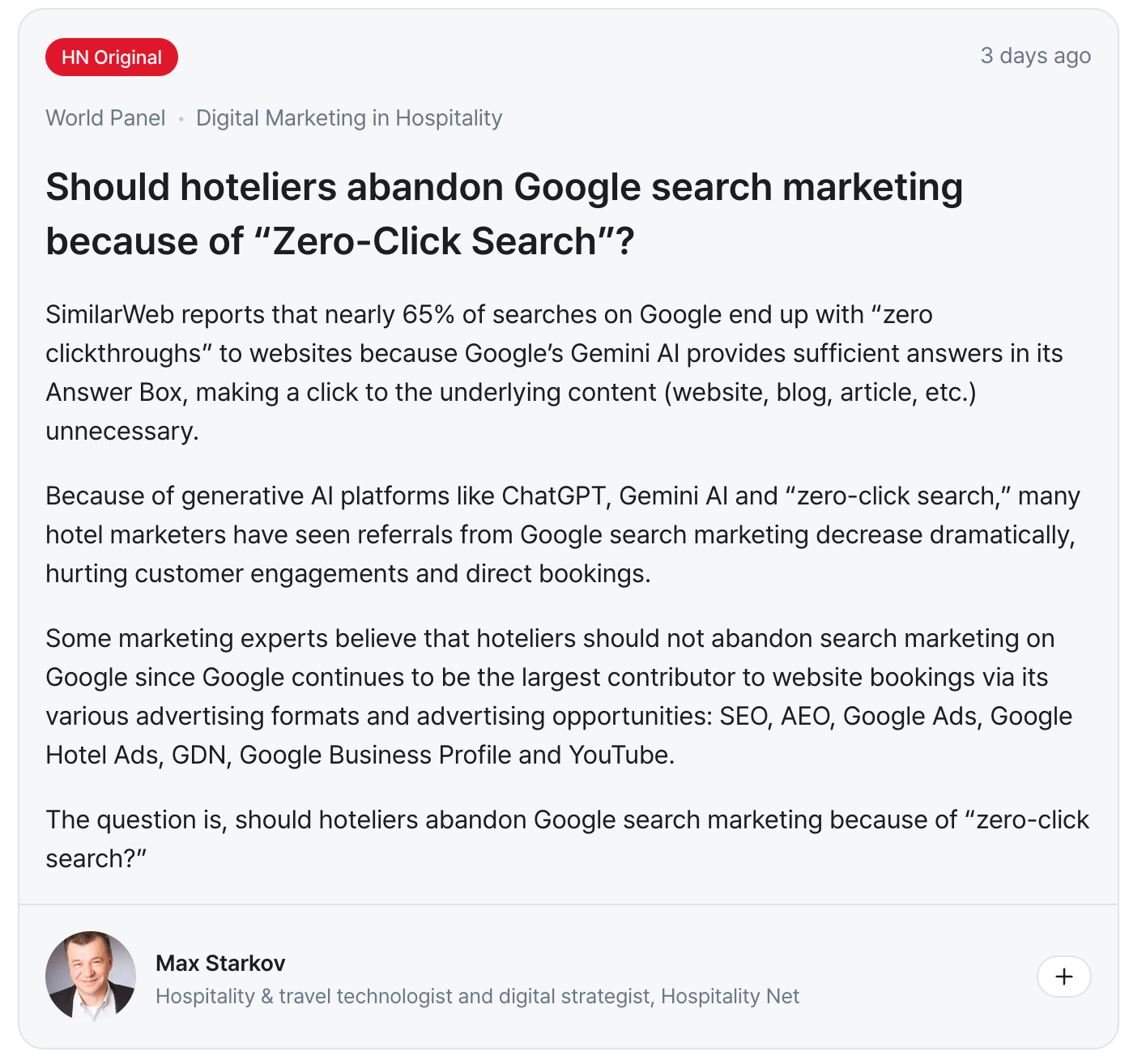
Should hoteliers abandon Google search marketing because of “Zero-Click Search”?
Increase hotel revenue, without the operational stress
The article looks at how independent hotels can grow direct revenue without adding more manual work, focusing on three areas: providing instant 24/7 answers to booking questions, using AI to recommend relevant packages and add-ons, and giving hotel teams the ability to quickly update offers, content, and availability when demand changes, with the broader message that technology should remove repetitive tasks so staff can respond faster and focus more on guests.
Hotels don't need more data, they need direction
The article argues that hotels do not need more dashboards but clearer direction, explaining how AI-powered actionable intelligence can connect existing data, surface the highest-impact commercial priorities, and recommend what teams should do next, with the broader focus on using AI to improve decision-making and prioritization rather than simply automate people or generate more reports.

The hotel guest journey no longer starts with Google
The article examines how hotel discovery has shifted from a Google-first journey to a multi-platform path involving TikTok, Instagram, AI assistants, maps, reviews, and hotel websites, then explains why hotels need consistent information, current content, strong operations, and closer coordination across marketing, revenue, sales, and operations to build trust and remain visible wherever travelers research and book.

Follow on LinkedIn