

Weekly Insights. October 24, 2026
Best hospitality industry articles focused on 💵revenue, 📊markets, and 🎯strategy (Oct 18 - Oct 24, 2026)

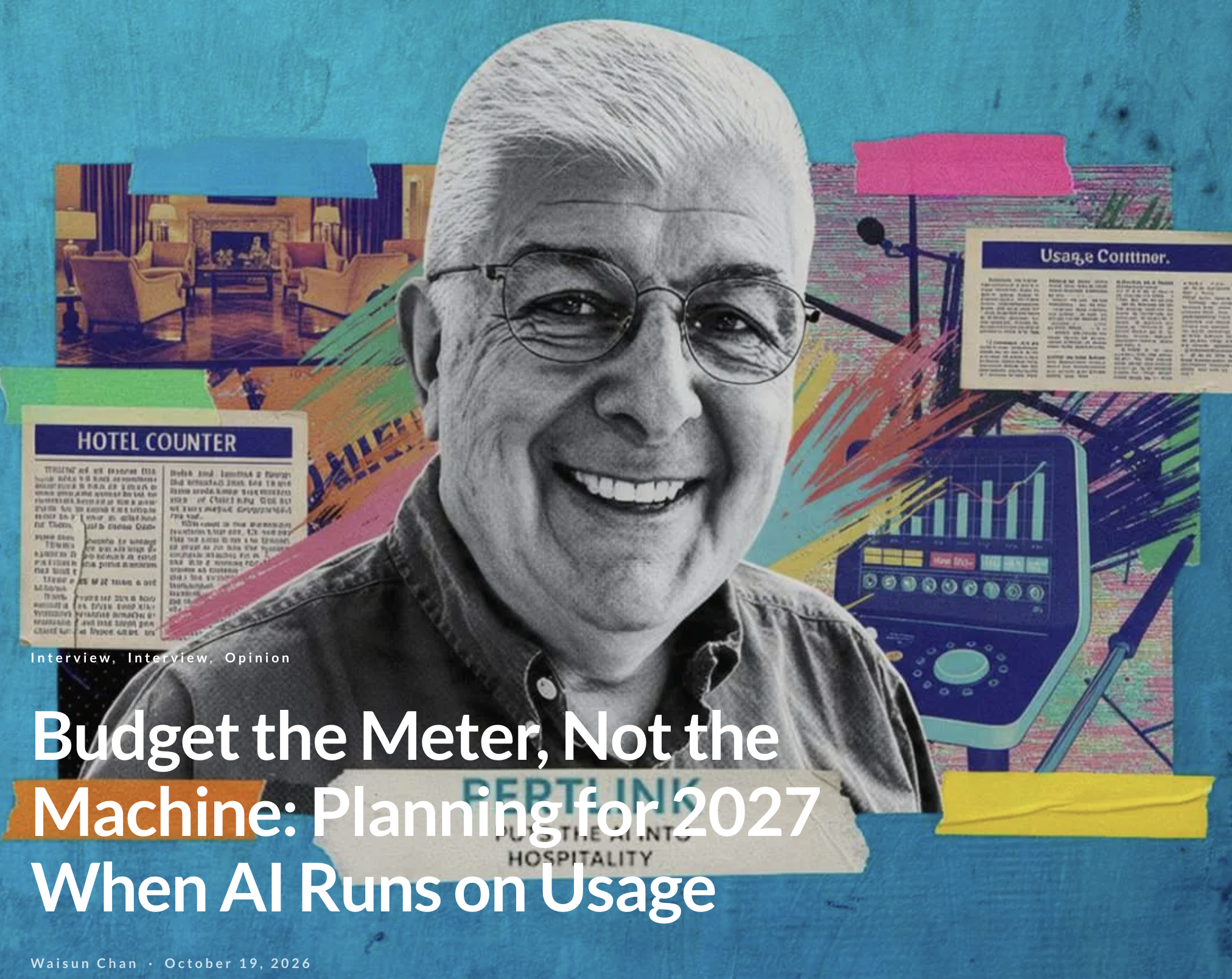
Budget the Meter, Not the Machine: Planning for 2027 When AI Runs on Usage
As AI becomes embedded in hotel operations, traditional software budgeting may no longer capture the true cost of technology. In an interview with hospitality technology expert Terence Ronson, the article introduces Token Cost Per Guest as a way to measure AI expenditure and recommends rolling forecasts, dedicated staff-training budgets, and clearer governance over automated decisions. It also distinguishes operational efficiency from actual cost savings and revenue creation, helping hotels evaluate whether AI investment delivers measurable financial returns.
How to use flight search data to forecast hotel demand
Research covering 40 destinations found that flight-search activity tends to align most closely with hotel occupancy approximately nine to ten weeks later, while hotel searches provide a shorter four-to-five-week signal. Examples from major events illustrate how changes in traveler interest can emerge before they become visible in booking pace. The article explains how commercial teams can combine these indicators with historical performance to improve pricing, anticipate high-demand dates, adjust inventory decisions, and direct marketing toward growing source markets.

Before you sign: What a soft brand actually sends your hotel
An examination of Hilton's Curio Collection and Marriott's Autograph Collection franchise disclosures provides a closer look at the financial benefits of joining a soft brand. Both report substantial RevPAR improvements following conversion, but the analysis highlights differences between averages and medians, the composition of loyalty-driven demand, and how brands define bookings attributed to their distribution systems. For independent hotel owners considering affiliation, it provides a framework for evaluating brand contribution beyond headline performance claims.
Hotel Revenue Management Technology: What Do You Really Need?
The article is a practical guide to simplifying a hotel’s revenue technology stack, arguing that most properties need a strong PMS, RMS, and channel manager before adding anything else, then looking at how much pricing automation makes sense, why reporting and BI are often underinvested in, when specialized tools can outperform all in one platforms, and why smaller independent hotels should avoid expensive enterprise systems they will never fully use. It also stresses that technology can speed up revenue strategy but cannot replace the human judgment needed to interpret demand shifts, market events, and unusual competitive behavior.

Your Hotel's Sales Strategy Is Being Written by Your Top 20 Accounts
The article argues that a hotel’s real sales strategy is often dictated by its top accounts rather than by the plan on paper, then shows how heavy account concentration can suppress rate potential, consume valuable compression dates, and turn salespeople into account servicers instead of new business hunters. It also proposes a practical way to reassess the top 20 accounts using net contribution, displacement, concessions, and relationship risk, with the goal of identifying which accounts should be repriced, restricted, diversified, or handled differently at renewal.

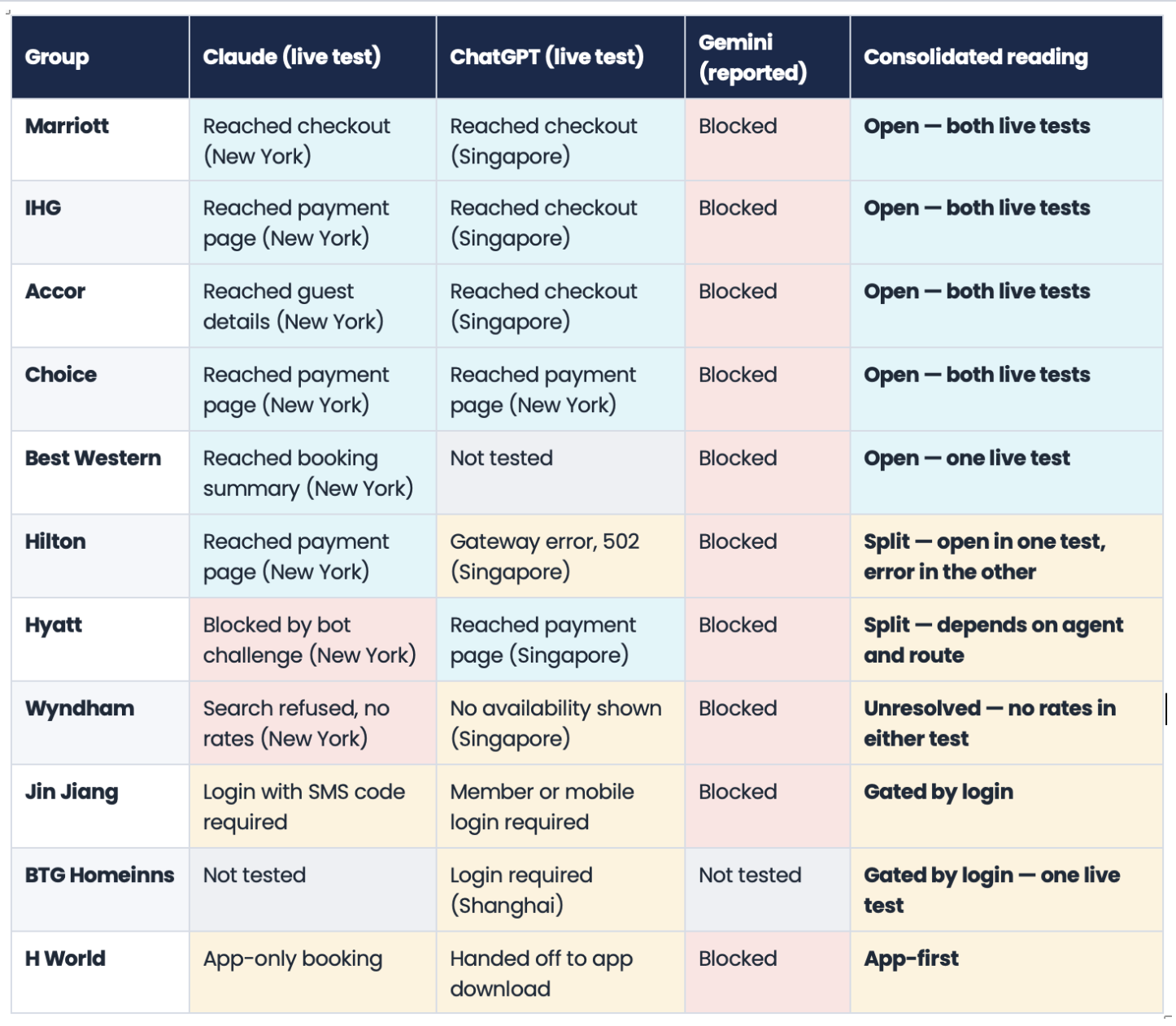
Are Hotels Closing Their Doors to AI Agents?
The article tests whether major hotel websites are actually accessible to AI booking agents, using live experiments with Claude, ChatGPT, and Gemini across leading hotel groups. It finds that most hotels are not deliberately blocking AI, but access is inconsistent because bot protection, location, login requirements, and payment verification can stop agents at different stages. The article also looks at why a blocked or ambiguous booking path could push demand toward intermediaries, the role of robots.txt, llms.txt, signed agents, MCP, and agent payment standards, and why hotels need to actively test whether AI agents can find rates, understand policies, and reach checkout rather than assuming their websites are ready.
Black Hat SEO Rerun: Are We Making the Same Mistakes With GEO?
Hotels trying to improve visibility in AI-generated recommendations risk repeating the mistakes of early search engine optimization by producing large volumes of content primarily for algorithms. The authors argue that effective AI visibility depends on clear hotel positioning, accurate property information, and content that answers specific questions from target travelers. Rather than generating endless FAQs and generic destination pages, hotels should focus on information that genuinely helps guests evaluate their options while making that content easy for search engines and AI systems to interpret.

Follow on LinkedIn