

Weekly Insights. November 8, 2026
Best hospitality industry articles focused on 💵revenue, 📊markets, and 🎯strategy (Nov 1 - Nov 8, 2026)

Are hotel budgets and incentive plans working against revenue optimization?
Expert panel discussion on whether hotel budgets and incentive plans are pushing departments to optimize their own targets instead of the property’s overall profit, with contributors examining how sales goals, RevPAR targets, expense budgets, and rigid annual plans can create conflicting decisions. It then explores alternatives such as shared GOP and GOPPAR goals, rolling forecasts, balanced scorecards, contribution based sales incentives, guest satisfaction measures, and closer coordination across revenue, sales, marketing, and operations, with the broader focus on rewarding decisions that improve total hotel profitability rather than simply hitting departmental numbers.
Hotels Are Adopting AI. Is Their Distribution Strategy Keeping Up?
Drawing on the 2026 State of Distribution report, the article examines why growing AI adoption has produced limited operational improvements for hotels. Fragmented systems, inconsistent data, and unclear decision ownership continue to undermine the benefits of automation. It offers a framework for prioritizing technology investments and strengthening distribution infrastructure before adding more AI tools.

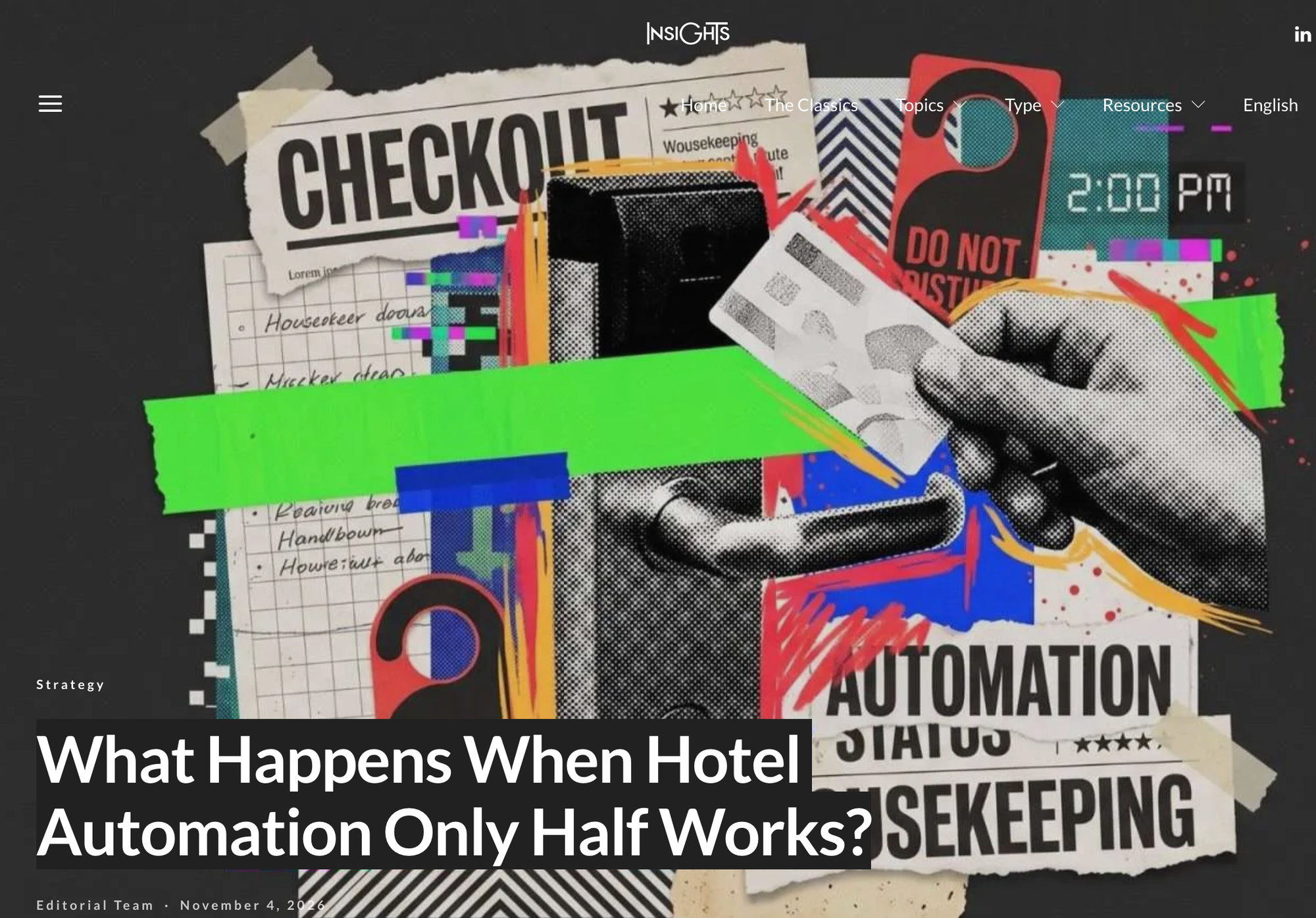
What Happens When Hotel Automation Only Half Works?
The article uses late checkout as a simple example of what happens when hotel automation completes the guest facing decision but fails to carry it through operations, showing how one approval can affect housekeeping, room access, reception, arrivals, luggage, and transport. It then explains why automation rules need operational context, why updates must reach the right teams, why unfinished actions need clear ownership, and why hotels should measure whether the promised service was actually delivered rather than just whether the request was approved.
Hotel Dynamic Pricing: How It Works & 8 Pricing Strategies
The article is a practical guide to hotel dynamic pricing, explaining how rates should move based on forecast demand, booking pace, lead time, remaining inventory, seasonality, segment, and market conditions rather than simply reacting to competitors. It then lays out eight pricing strategies, including forecast led pricing, lead time management, seasonality and event adjustments, inventory controls, rate fences, and competitor benchmarking, while also covering common mistakes, the role of RMS technology, and how to judge whether dynamic pricing is actually improving RevPAR and total revenue.

How to Use Hotel Market Segmentation to Boost Revenue
The article is a practical guide to hotel market segmentation, explaining the main segments such as transient, group, corporate negotiated, local negotiated, wholesale, and discount business, then showing how hotels can go deeper by combining geographic, demographic, psychographic, and behavioral data. It also covers how to identify the most profitable segments using ADR, RevPAR, acquisition cost, profit per guest, and total revenue, what tools like PMS, RMS, CRM, analytics, and surveys contribute, and the main challenges around overlapping segments, fragmented data, privacy, and turning analysis into actual pricing, marketing, staffing, and inventory decisions.

Back to Fixed Hotel Rates: The 2027 Corporate RFP Trend Nobody Predicted
Despite years of predictions that dynamic pricing would replace fixed corporate rates, fixed rates account for 86.6% of accepted 2027 corporate agreements, up from 84% the previous year. The article examines the influence of corporate buyers, travel management companies, and negotiating leverage on this trend. It explains what the shift means for hotels preparing corporate rate proposals and balancing account retention with revenue optimization.

Have hotel websites become the least important part of the digital customer journey?
The article is an expert panel discussion on whether hotel websites are becoming less important as travelers increasingly discover properties through OTAs, Google Maps, social media, reviews, and AI assistants. Most contributors argue that the website is not disappearing but its role is changing from the center of discovery to a trusted source of truth, conversion, and brand storytelling, with the discussion covering AI visibility, SEO, content accuracy, booking engine friction, reputation, and whether hotels should shift money away from frequent redesigns toward better distribution, structured content, CRM, and a smoother booking experience.
Follow on LinkedIn