Weekly Insights. October 3, 2026
Best hospitality industry articles focused on 💵revenue, 📊markets, and 🎯strategy (Sep 27 - Oct 3, 2026)

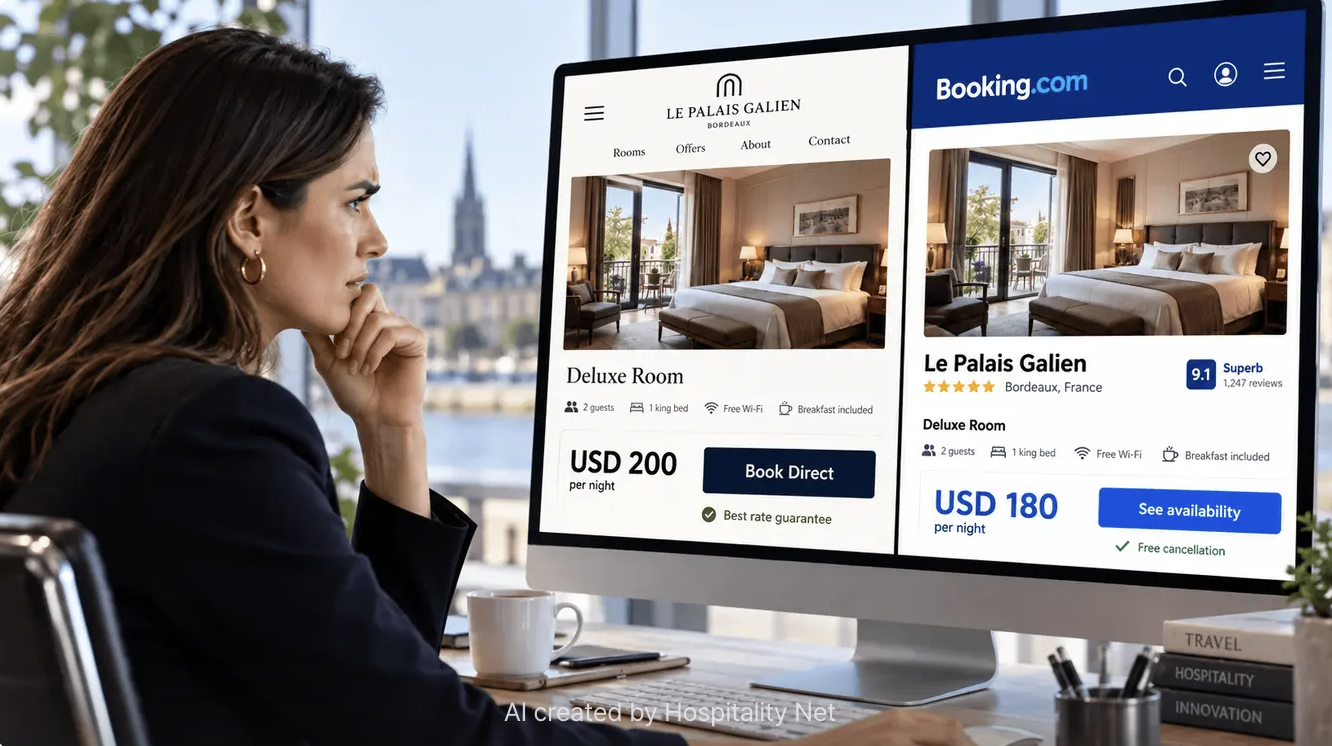
Hotels losing pricing control: You set the rate. Booking com sets the price
Article examines how Booking com’s merchant model is changing rate control, with the OTA increasingly able to discount the guest-facing price below the rate supplied by the hotel. Using HOTREC distribution data, it shows how widespread OTA undercutting has become and how hotels can end up matching prices that intermediaries themselves created.
'Constant intention to buy' forces hotels to rethink the marketing funnel
The traditional "inspiration - research - booking" funnel is becoming much less linear. Research cited in the article says travelers now encounter about 65 touchpoints before booking, versus 45 in 2018, while 78% continue researching after booking and half have changed accommodation after finding something better. The proposed alternative is thinking in terms of overlapping marketing “orbits,” which has implications for attribution, content strategy and how hotels remain relevant before and after conversion.

How to choose an outsourced revenue management company for your hotel
The article is a practical buyer’s guide for hotels considering outsourced revenue management, covering what a full service provider should actually manage, the differences between full outsourcing, hybrid support, advisory, and audits, and ten criteria for comparing companies such as hotel type experience, who will manage the property day to day, strategic depth beyond rate changes, technology compatibility, KPIs, reporting rhythm, decision rights, the first 90 day plan, fees, and data security. It also includes warning signs to watch for and a weighted scorecard to help hotels compare providers before signing.

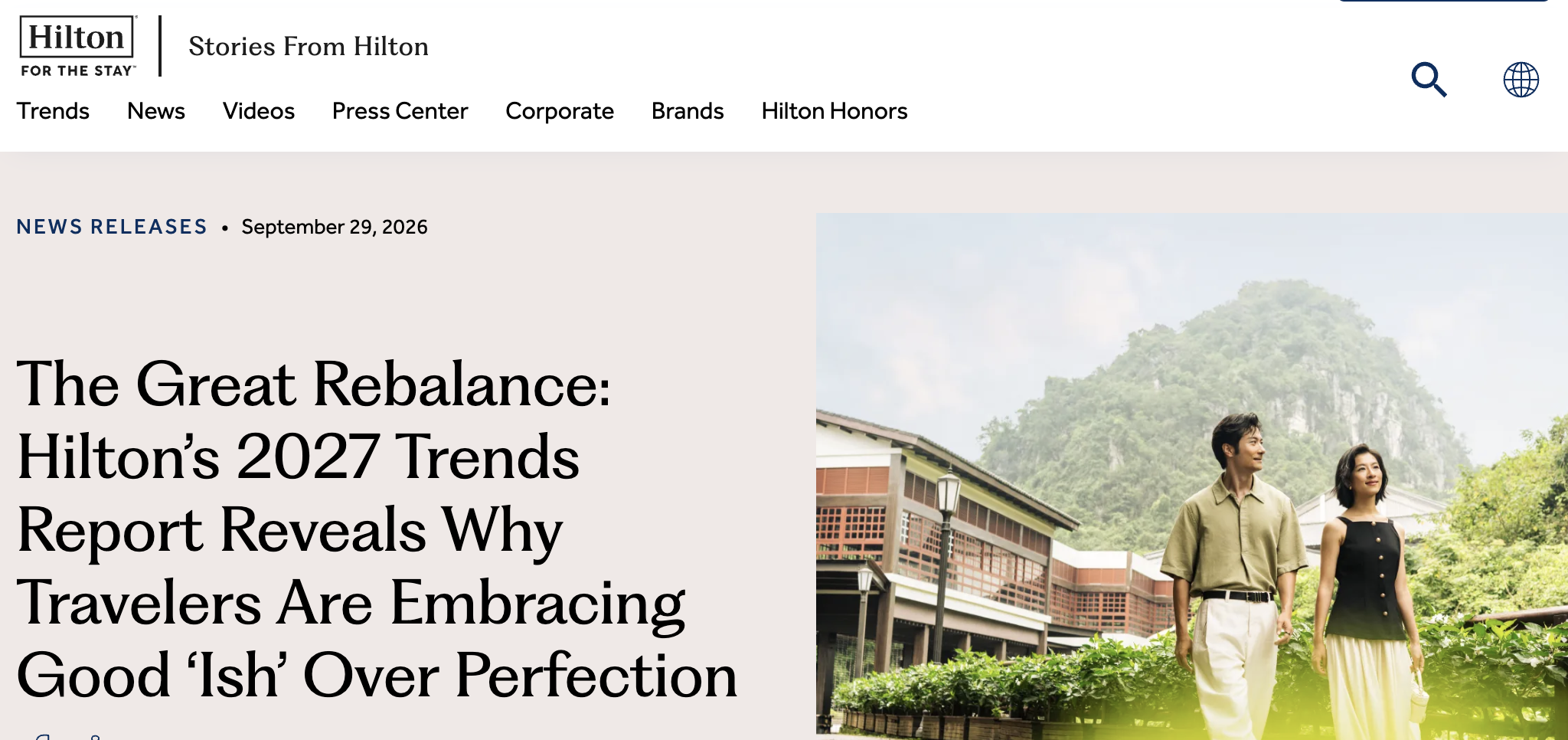
The great rebalance: Hilton’s 2027 trends report reveals why travelers are embracing good ‘ish’ over perfection
Hilton's research with Morning Consult surveyed 14,744 travelers across 14 countries and identifies shifts toward shorter and more flexible trips, personal-growth experiences, nature-based wellness and greater reliance on trusted human recommendations. Among the useful signals for hotels: 67% want to experience a lot in a short trip, 63% prefer centrally located accommodations, and 70% trust hotel staff as a travel-planning resource. The findings give marketing, experience and product teams useful direction for 2027 planning rather than simply forecasting where people will travel.
New h2c study: AI adoption is widespread among hotel chains, but enterprise readiness remains limited
Based on 122 responses representing 113 hotel chains and more than 8,200 properties, h2c finds that 91% already use AI but only 28% have a company-wide strategy and just 13% report measurable ROI. The biggest obstacles have shifted toward skills, integration, strategy and data governance rather than simply cost. Particularly relevant commercially, 70% expect AI-driven booking channels to increase direct bookings, yet only 22% systematically monitor their visibility in AI results and one-third have taken no specific action to improve AI visibility or bookability.

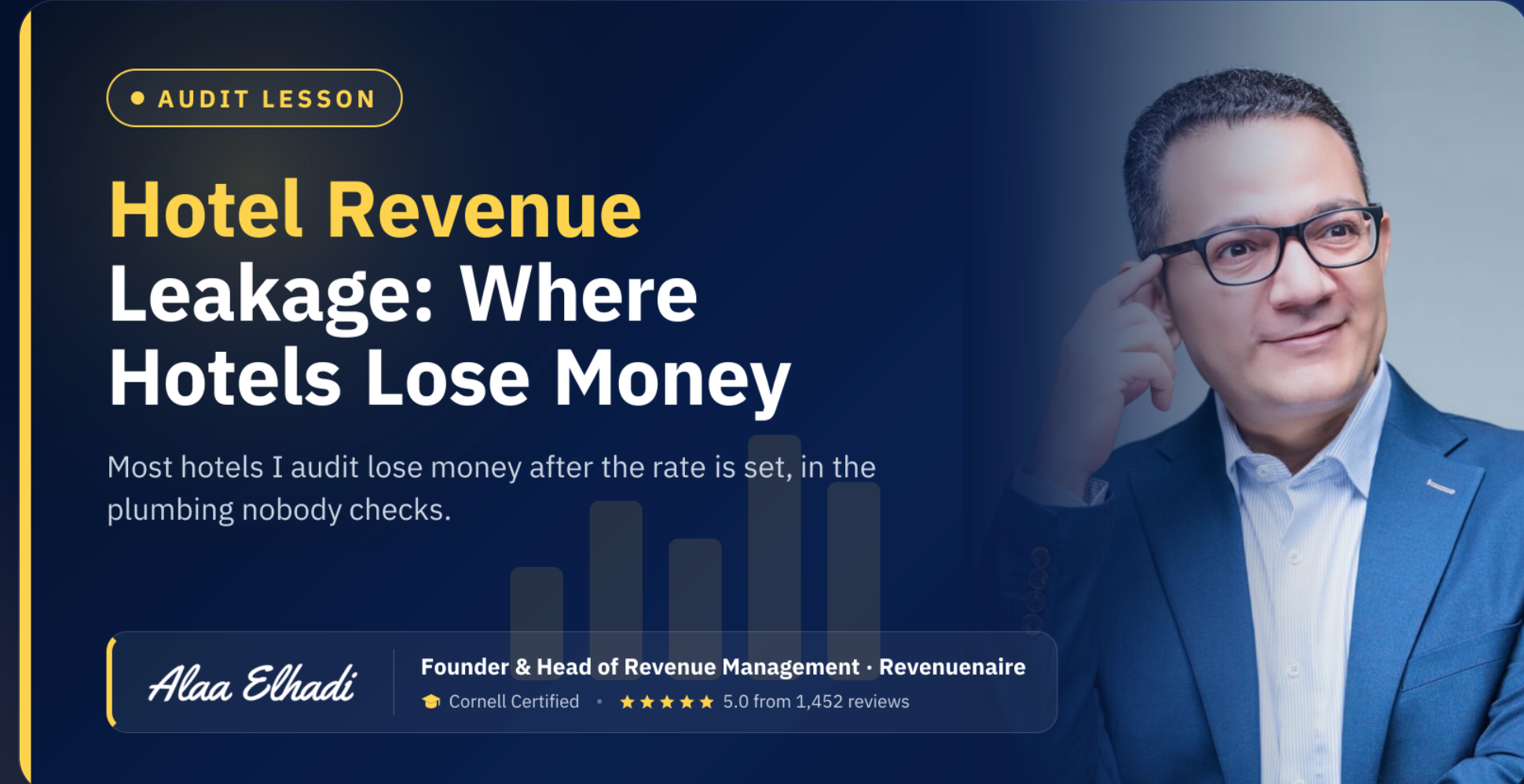
Hotel revenue leakage: Where hotels lose money
This article is focused on money lost after the pricing decision has already been made: incorrect rate loading, leaked wholesale inventory, OTA commission errors, uncharged virtual cards, stale restrictions and problems in the direct-booking path. It includes a worked 120-room hotel example where six relatively small leaks add up to more than $58,000 annually, plus a repeatable monthly audit checklist.
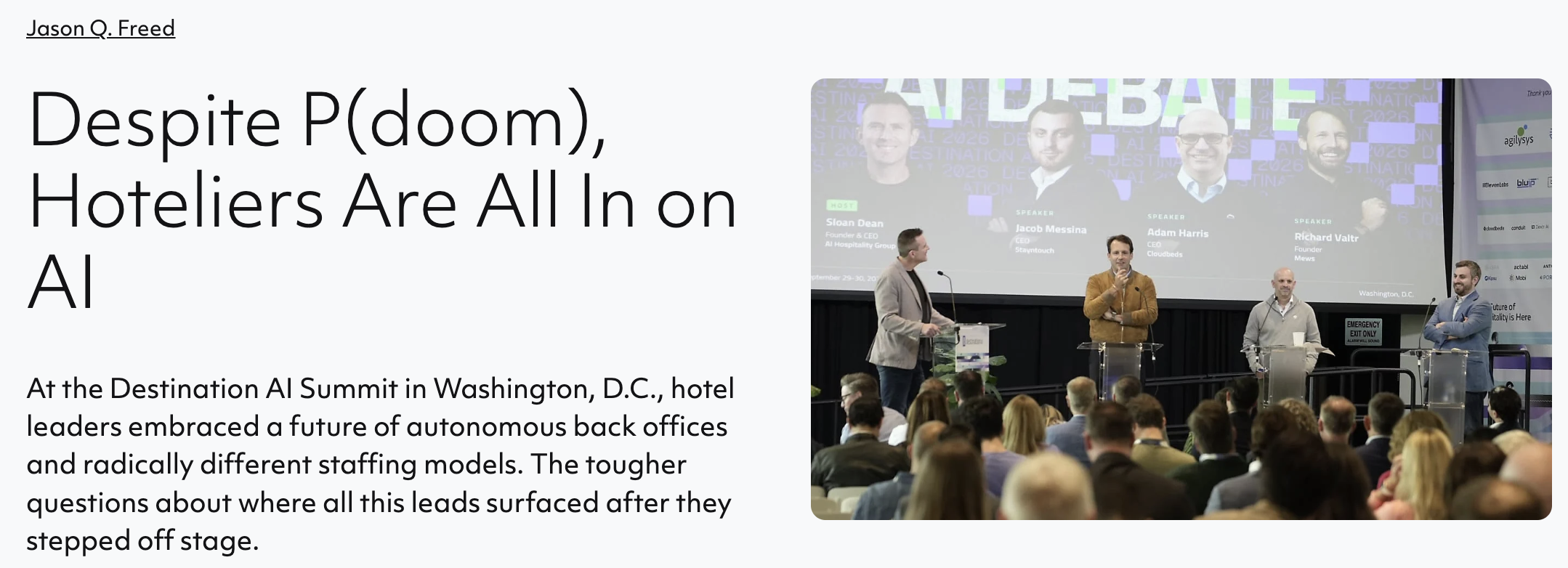
Despite P(doom), hoteliers are All in on AI
This is a recap of the Destination AI Summit held September 29–30 in Washington, D.C., with takeaways from hotel owners, operators and technology leaders.
Follow on LinkedIn